
Introduction
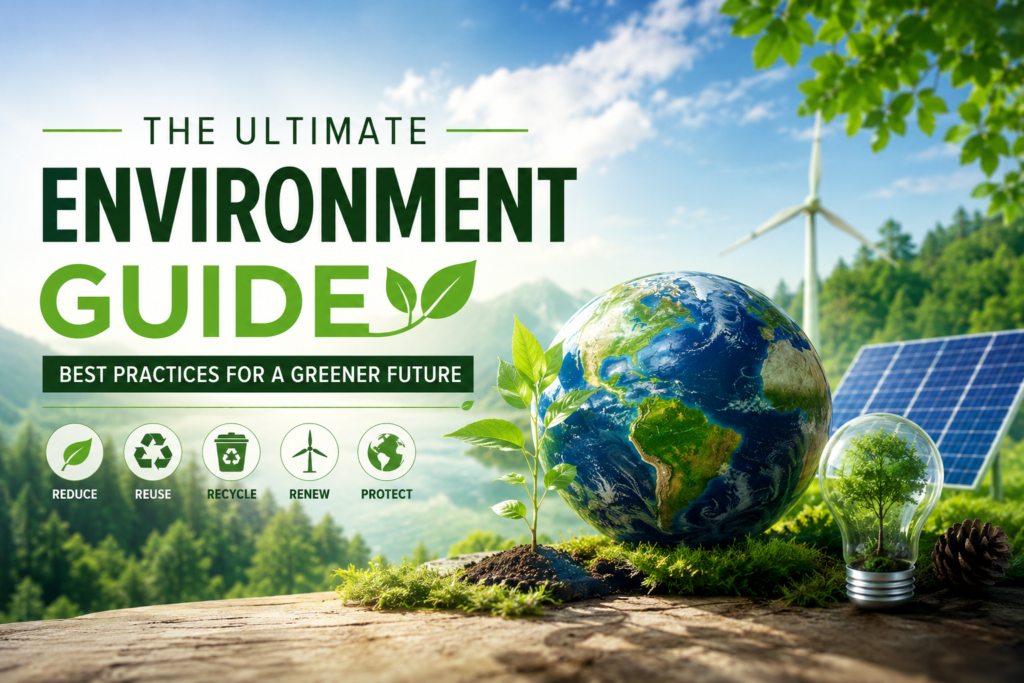
The Ultimate Environment Guide: Best Practices for a Greener Future provides practical strategies for protecting our planet and building a sustainable world. As environmental challenges continue to grow, individuals, businesses, and governments must adopt responsible practices that reduce pollution, conserve resources, and support long-term environmental health. This guide explores the most effective ways to create a greener future for generations to come.
The Ultimate Environment Guide: Best Practices for a Greener Future aims to provide practical insights, expert recommendations, and actionable strategies that individuals, businesses, and governments can adopt to protect the environment. By understanding environmental challenges and implementing sustainable solutions, we can create a cleaner, healthier, and more sustainable future for generations to come.
In recent years, environmental awareness has increased significantly. People around the world are embracing eco-friendly lifestyles, supporting renewable energy, reducing waste, and advocating for stronger environmental policies. Despite this progress, much more work remains to be done.
This comprehensive guide explores the most effective environmental practices, highlights key environmental challenges, and offers practical examples of how everyone can contribute to a greener future.

Understanding the Environment and Its Importance
The environment encompasses all living and non-living elements that surround us. It includes natural resources such as air, water, soil, forests, oceans, plants, animals, and the ecosystems that connect them.
A healthy environment provides numerous benefits:
- Clean air for breathing
- Fresh water for drinking and agriculture
- Fertile soil for food production
- Natural habitats for wildlife
- Climate regulation
- Economic opportunities through natural resources
Without a healthy environment, human societies face serious challenges including food shortages, water scarcity, disease outbreaks, and economic instability.
Environmental protection is therefore not merely an ecological issue—it is also a social, economic, and public health priority.
Major Environmental Challenges Facing the World Today
Climate Change
Climate change remains one of the greatest environmental threats facing humanity. Rising greenhouse gas emissions from burning fossil fuels have increased global temperatures, causing:
- More frequent heatwaves
- Severe droughts
- Rising sea levels
- Stronger storms and hurricanes
- Melting glaciers and polar ice caps
These changes threaten ecosystems, economies, and human communities worldwide.
Practical Example
Many coastal cities are already investing billions of dollars in flood protection systems to combat rising sea levels caused by climate change.
Air Pollution
Air pollution results from emissions generated by vehicles, factories, power plants, and other industrial activities.
Common pollutants include:
- Carbon dioxide
- Sulfur dioxide
- Nitrogen oxides
- Particulate matter
Exposure to polluted air contributes to respiratory diseases, heart conditions, and millions of premature deaths annually.
Best Practice
Switching to electric vehicles, improving public transportation, and expanding renewable energy sources can significantly reduce air pollution levels.
Water Pollution
Water pollution occurs when harmful substances contaminate rivers, lakes, oceans, and groundwater supplies.
Major causes include:
- Industrial waste
- Agricultural runoff
- Plastic pollution
- Oil spills
- Untreated sewage
Clean water is essential for human health, agriculture, and biodiversity.
Best Practice
Communities can improve water quality by investing in wastewater treatment facilities and reducing plastic consumption.
Deforestation
Forests play a critical role in absorbing carbon dioxide and supporting biodiversity. However, millions of hectares of forest are cleared each year for agriculture, urban development, and logging.
Consequences include:
- Habitat destruction
- Increased carbon emissions
- Soil erosion
- Loss of biodiversity
Practical Example
Large-scale tree-planting initiatives in several countries have demonstrated how reforestation can restore ecosystems and combat climate change.
The Importance of Sustainable Living
Sustainable living involves making choices that minimize environmental impact while preserving resources for future generations.
Key principles include:
- Reducing waste
- Conserving energy
- Using renewable resources
- Supporting environmentally responsible businesses
- Protecting natural habitats
Small changes made by millions of people can create significant positive environmental outcomes.
Renewable Energy: The Foundation of a Greener Future
Renewable energy sources provide clean alternatives to fossil fuels.
Solar Energy
Solar power converts sunlight into electricity through photovoltaic panels.
Benefits include:
- Reduced carbon emissions
- Lower energy bills
- Long-term sustainability
Many homeowners and businesses are increasingly adopting solar technology.
Wind Energy
Wind turbines generate electricity using wind power.
Advantages include:
- Zero fuel costs
- Low environmental impact
- Reduced greenhouse gas emissions
Countries investing heavily in wind energy have significantly reduced dependence on fossil fuels.
Hydropower
Hydropower generates electricity using flowing water.
Benefits include:
- Reliable energy production
- Low emissions
- Long operational lifespan
When properly managed, hydropower can contribute substantially to clean energy goals.
Waste Management and Recycling
Proper waste management helps reduce pollution and conserve resources.
Reduce
The most effective strategy is reducing waste generation.
Examples include:
- Using reusable bags
- Avoiding single-use plastics
- Purchasing durable products
Reuse
Reusing products extends their lifespan and reduces landfill waste.
Examples:
- Refillable water bottles
- Reusable containers
- Donating unwanted items
Recycle
Recycling converts waste materials into new products.
Common recyclable materials include:
- Paper
- Glass
- Plastic
- Aluminum
- Steel
Effective recycling programs help conserve natural resources and reduce pollution.
Protecting Biodiversity
Biodiversity refers to the variety of life on Earth.
Healthy ecosystems depend on biodiversity for:
- Pollination
- Food production
- Water purification
- Climate regulation
Threats include:
- Habitat destruction
- Pollution
- Climate change
- Invasive species
Protecting biodiversity requires conservation efforts at local, national, and global levels.