
Introduction
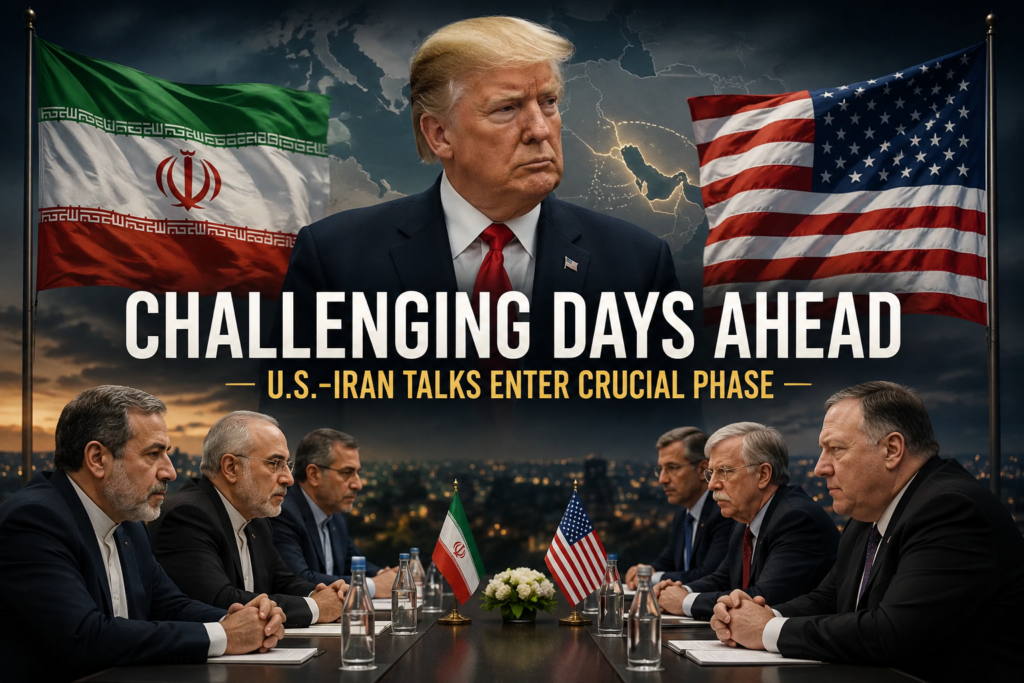
Challenging Days Ahead Trump Team Warns About Rising Tensions With Iran has become a major topic of discussion among political analysts and international observers. Following recent diplomatic developments between Washington and Tehran, senior officials close to President Donald Trump have suggested that the coming weeks could prove decisive for regional stability, nuclear negotiations, and global energy markets.
Her remarks have sparked debate about what lies ahead in one of the most sensitive diplomatic relationships in modern international politics. While the memorandum has been presented as a breakthrough, many of the issues that have divided Washington and Tehran for decades remain unresolved.
The coming weeks could determine whether both sides move toward a lasting agreement or return to confrontation.

Why the Next 60 Days Matter
According to reports surrounding the memorandum, the agreement commits both sides to continue negotiations for up to 60 days, with the possibility of extension if both parties agree. The goal is to transform the current understanding into a comprehensive and final agreement.
However, signing a memorandum is often the easiest part of diplomacy.
The real challenge begins when negotiators attempt to convert political promises into detailed commitments. Every paragraph, every technical detail, and every security concern can become a source of disagreement.
History shows that negotiations between Washington and Tehran rarely move smoothly. Distrust accumulated over decades cannot disappear overnight.
The Nuclear Question Remains the Biggest Obstacle
Perhaps no issue is more important than Iran’s nuclear program.
For years, the United States and its allies have expressed concerns about uranium enrichment, nuclear transparency, and the possibility of future weaponization. Iran has consistently argued that its nuclear activities are intended for peaceful purposes and civilian energy production.
Even if both governments agree on broad principles, technical details remain difficult.
Key questions include:
- How much uranium enrichment will be permitted?
- What level of international inspections will be accepted?
- How quickly could sanctions be lifted?
- What guarantees will each side receive?
Without answers to these questions, a final agreement may remain elusive.
Many analysts believe the nuclear issue alone could determine whether the current diplomatic process succeeds or fails.
The Missile Program Debate
Another major point of contention involves Iran’s ballistic missile program.
American policymakers have repeatedly argued that missile development cannot be separated from regional security discussions. Iranian officials, however, consider missile capabilities an essential part of national defense.
This disagreement creates a fundamental challenge.
From Washington’s perspective, any long-term agreement should address military capabilities that could threaten regional stability.
From Tehran’s perspective, limiting missile development could weaken deterrence capabilities in an unstable region.
Finding common ground will not be easy.
Regional Influence and Proxy Networks
The memorandum may have reduced tensions temporarily, but broader geopolitical disputes remain.
Iran’s relationships with regional groups and organizations continue to generate concern among American and allied policymakers.
For decades, Washington has criticized Tehran’s support for regional partners across the Middle East.
Iran argues that these relationships are part of its security strategy and regional influence.
The issue goes far beyond bilateral relations.
It touches:
- Lebanon
- Iraq
- Syria
- Yemen
- Gulf security arrangements
Any comprehensive agreement will likely require discussions about regional stability and security architecture.
Economic Expectations Inside Iran
Beyond politics and security, economic realities are creating pressure.
Many Iranians hope diplomatic progress could eventually improve economic conditions.
Years of sanctions have affected:
- Foreign investment
- Banking access
- International trade
- Currency stability
- Employment opportunities
If negotiations advance successfully, markets may respond positively.
However, expectations can be dangerous.
Should talks collapse after raising public hopes, economic uncertainty could increase further.
For ordinary citizens, diplomatic success is not merely a political issue; it directly affects daily life.
Why Critics in the United States Remain Skeptical
The memorandum has not been welcomed by everyone.
Some American political figures have strongly criticized the agreement and warned that it could represent a major shift in long-standing U.S. policy toward Iran. Critics argue that any agreement must ensure strict limitations and clear verification mechanisms.
Supporters of engagement argue the opposite.
They believe diplomacy offers a better path than continued escalation.
The debate reflects a broader question in American foreign policy:
Should pressure remain the primary strategy, or should engagement become the preferred approach?
This question has divided policymakers for years.
The Global Energy Dimension
Although much of the discussion focuses on diplomacy, energy markets are watching developments closely.
Iran remains one of the world’s most significant energy producers.
Any major change in relations between Tehran and Washington could influence:
- Global oil prices
- Energy security
- Investment flows
- Regional economic stability
The Strait of Hormuz remains one of the most strategically important waterways on earth.
A significant portion of global energy supplies passes through this route.
As a result, developments between Iran and the United States are never merely bilateral matters.
They have global consequences.
Israel’s Perspective
The diplomatic process is also being monitored carefully by Israel.
Israeli leaders have long viewed Iran’s nuclear and missile programs as major security concerns.
Recent political debates inside Israel have highlighted differing views regarding how Iran should be addressed.
Some analysts believe diplomacy can reduce risks.
Others remain unconvinced and argue that stronger measures are necessary.
Regardless of perspective, any agreement involving Iran is likely to influence Israeli security calculations for years to come.
The Challenge of Building Trust
Perhaps the most difficult obstacle is trust.
Diplomatic agreements ultimately depend on confidence that commitments will be respected.
Both Washington and Tehran carry historical grievances.
Each side remembers previous agreements, sanctions, political disputes, and regional confrontations.
As a result, even positive developments are often viewed cautiously.
Negotiators must therefore address not only technical issues but also psychological and political barriers.
Building trust may prove harder than drafting the agreement itself.
What Happens if Talks Fail?
Failure remains a possibility.
If negotiations break down, several consequences could follow:
- Renewed diplomatic tensions
- Expanded sanctions
- Increased regional instability
- Greater uncertainty in energy markets
- Rising military risks
Even if neither side seeks confrontation, misunderstandings can create dangerous situations.
This explains why many analysts consider the next two months particularly important.
The stakes extend far beyond the negotiating table.
Why Susie Wiles’ Warning Matters
When Susie Wiles stated that challenging days lie ahead, many observers interpreted the comment as recognition of political reality rather than pessimism.
Her statement acknowledges that signing an agreement is only the beginning.
The difficult phase involves implementation, compromise, verification, and political management.
The next 60 days will likely feature:
- Intensive diplomatic meetings
- Technical negotiations
- Domestic political debates
- Regional reactions
- Market uncertainty
Whether these developments ultimately produce a lasting agreement remains uncertain.
Conclusion
The warning from Trump’s Chief of Staff reflects a reality that diplomats, analysts, and policymakers understand well: peace processes are often more difficult after the headlines fade.
The memorandum between the United States and Iran has created a new opportunity, but opportunity alone does not guarantee success.
The nuclear program, missile capabilities, regional influence, sanctions, economic expectations, and political opposition all remain unresolved.
The coming 60 days may therefore become one of the most consequential diplomatic periods in recent U.S.-Iran relations.
If negotiations succeed, they could reshape regional politics and improve stability across the Middle East.
If they fail, the world may once again face rising tensions between two countries whose relationship has shaped global affairs for decades.
For now, all eyes remain on the negotiating table—and on the challenging days that may lie ahead.