
Introduction
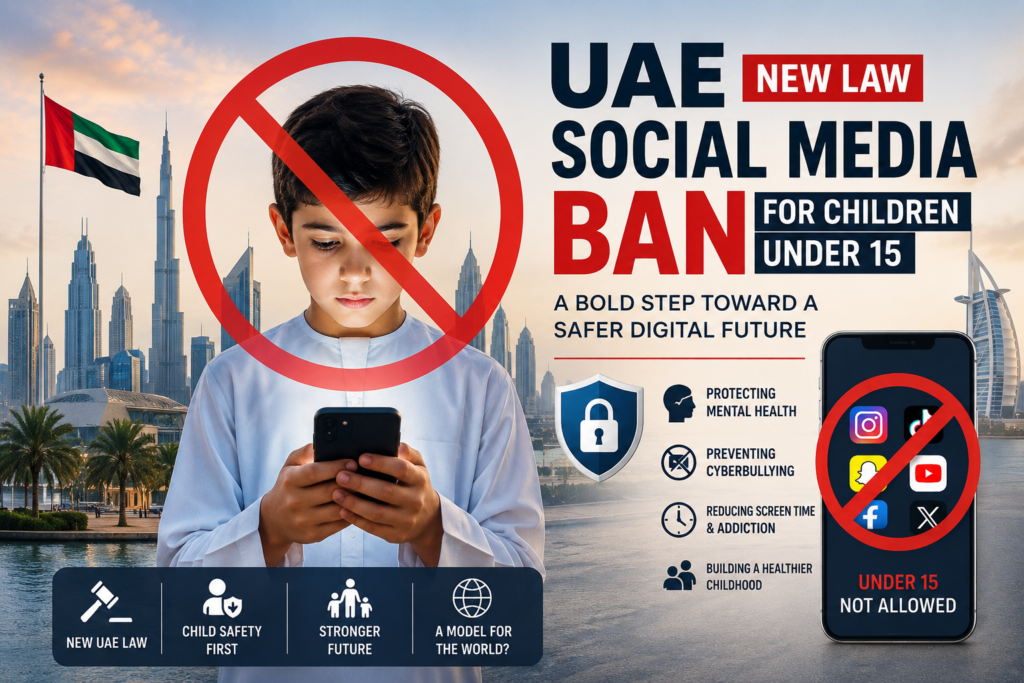
Why the UAE’s New Social Media Ban for Children Under 15 Could Change the Future of Digital Safety is a question attracting global attention as governments seek stronger protections for young internet users. The UAE’s decision to restrict social media access for children under 15 represents a major shift in digital policy and could influence how other countries approach online safety, mental health, and child protection in the digital age.
The United Arab Emirates has introduced a groundbreaking law that prohibits children under the age of 15 from using social media platforms. The move has attracted international attention because it makes the UAE one of the first countries in the world—and the first Arab nation—to implement such a restriction.
The decision comes at a time when governments, educators, parents, and technology experts are increasingly concerned about the impact of social media on young people. Questions about mental health, cyberbullying, online addiction, misinformation, and digital privacy have become central to public debate.
While supporters describe the measure as a necessary step to protect children, critics argue that implementation may prove difficult and could raise questions about digital freedoms and parental responsibility.
The UAE’s decision may not only affect families within the country but could also influence policymakers across the Middle East and beyond.

The Growing Influence of Social Media on Children
Social media has become one of the most powerful forces shaping modern childhood.
Platforms such as Instagram, TikTok, Snapchat, YouTube, and others have transformed the way young people communicate, learn, and spend their free time.
For many children, social media is no longer simply a source of entertainment. It has become part of daily life.
Young users spend hours watching videos, interacting with friends, following influencers, and consuming content from around the world.
While these platforms offer opportunities for learning and creativity, experts warn that excessive use can create serious challenges.
Research has linked heavy social media use among children and teenagers to:
- Anxiety and depression
- Sleep disorders
- Reduced concentration
- Lower academic performance
- Cyberbullying
- Exposure to harmful content
- Reduced physical activity
These concerns have prompted governments to explore stronger protections for young users.
Why the UAE Introduced the New Law
According to officials, the primary objective is protecting children from online risks.
The government believes that younger users are particularly vulnerable to digital threats.
Children often lack the experience needed to identify:
- Online scams
- False information
- Predatory behavior
- Privacy violations
- Harmful online communities
By restricting access until age 15, authorities hope to reduce exposure to these dangers.
Supporters argue that childhood should include more face-to-face interaction, outdoor activities, and educational development rather than constant engagement with digital platforms.
Mental Health Concerns
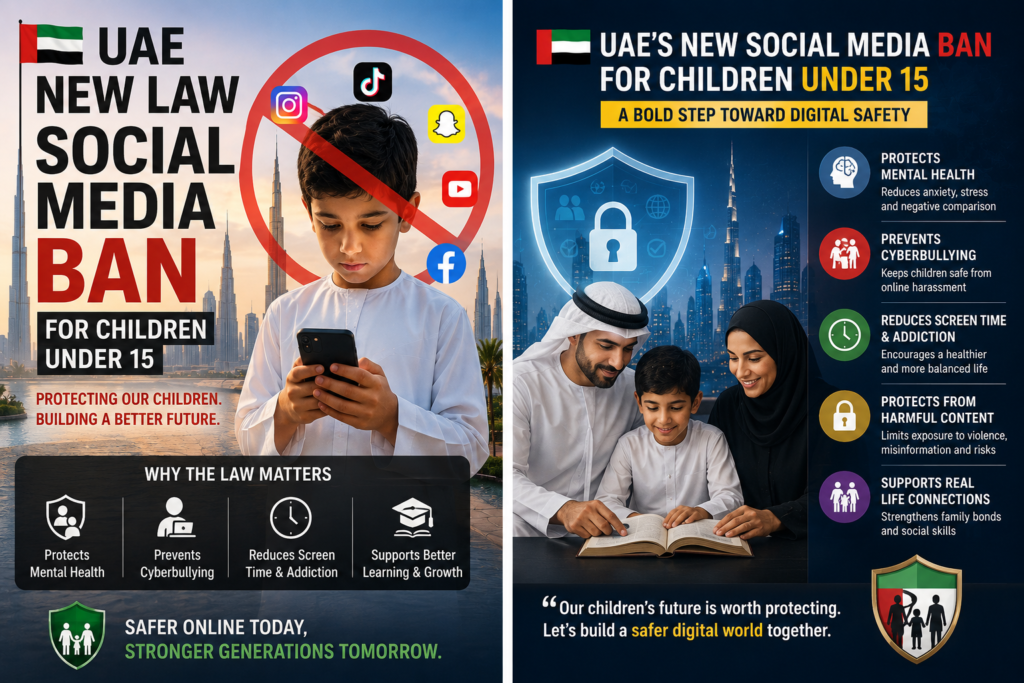
Mental health has become one of the strongest arguments supporting social media regulation.
Psychologists have warned that social media can create unrealistic expectations about beauty, success, and lifestyle.
Young users frequently compare themselves to carefully edited content posted by influencers and celebrities.
This can contribute to:
- Low self-esteem
- Social anxiety
- Depression
- Body image concerns
Studies conducted around the world have shown a growing connection between excessive social media use and declining mental well-being among young people.
Parents and educators increasingly report concerns about children’s dependence on smartphones and digital platforms.
The UAE’s decision reflects these growing concerns.
The Challenge of Cyberbullying
Cyberbullying remains one of the most serious online threats facing children.
Unlike traditional bullying, cyberbullying can occur at any time and reach victims even when they are at home.
Negative comments, harassment, threats, and online humiliation can have lasting psychological consequences.
Experts say younger children often struggle to understand how to respond to online abuse.
The new law could reduce exposure to these risks during critical developmental years.
Digital Addiction and Screen Time
Many families face challenges managing children’s screen time.
Social media companies design platforms to maximize engagement.
Notifications, recommendations, endless scrolling, and personalized content encourage users to spend more time online.
For children, this can lead to unhealthy habits.
Some studies suggest that excessive screen use may interfere with:
- Sleep quality
- Physical activity
- Academic achievement
- Family relationships
The UAE’s restrictions are partly intended to address these concerns.
Global Reactions and International Trends
The UAE is not alone in addressing social media concerns.
Countries around the world are debating stricter regulations.
Australia has explored age verification systems.
European countries have introduced stronger privacy protections for children.
Several governments are considering measures that would require parental consent for younger users.
The UAE’s approach may serve as a model for other nations evaluating similar policies.
Challenges of Enforcement
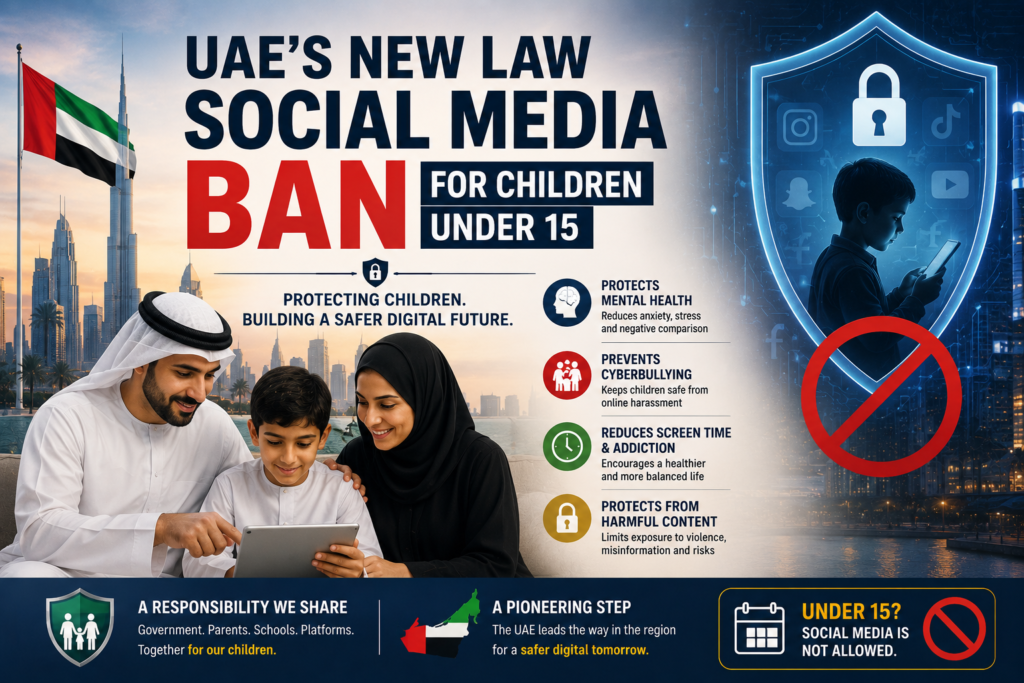
While many support the law’s goals, enforcement remains a significant challenge.
Technology experts question whether age-verification systems can completely prevent underage users from accessing social media.
Children often possess advanced digital skills and may attempt to bypass restrictions.
Companies operating social media platforms may also face pressure to develop more sophisticated verification technologies.
The effectiveness of the law will depend largely on implementation.
The Role of Parents
Experts emphasize that legislation alone cannot solve every problem.
Parents remain the first line of defense.
Families can support healthy digital habits by:
- Monitoring online activity
- Setting screen-time limits
- Encouraging outdoor activities
- Promoting open communication
- Teaching digital literacy
Successful child protection requires cooperation between governments, schools, technology companies, and parents.
Economic and Technology Industry Impact
The new law may also affect technology companies operating in the region.
Social media platforms generate revenue through user engagement and advertising.
Restrictions on younger users could influence audience growth and advertising strategies.
Companies may need to invest more heavily in age-verification systems and child safety features.
At the same time, the law may encourage innovation in educational technology designed specifically for younger audiences.
Could Other Arab Countries Follow?
Many analysts believe other countries in the Middle East will closely monitor the UAE’s experience.
If the policy proves successful, governments across the region may consider similar measures.
The UAE has often been viewed as a leader in technology policy and digital governance.
Its decisions frequently attract regional attention.
A successful implementation could influence future legislation throughout the Arab world.
Conclusion
The UAE’s decision to prohibit social media use for children under 15 represents one of the most significant digital policy developments in recent years.
Supporters see it as a necessary step to protect young people from cyberbullying, addiction, harmful content, and mental health challenges.
Critics question enforcement and practical implementation.
Regardless of differing opinions, the law has sparked an important global conversation about the role of technology in childhood.
As governments continue searching for ways to balance innovation with safety, the UAE’s approach may become a major case study for policymakers worldwide.
The coming years will reveal whether this bold decision becomes a model for the future of child protection in the digital age.